


This travel guide includes all of my recommended Morocco highlights and essential information when planning a trip to Morocco. I visited Morocco with friend on a group tour where we travelled by coach on a road trip across the country over 14 days. We were there during Ramadan and when Morocco qualified for the World Cup so it was a special time of celebration with friends and family.
Morocco Highlights: Top Places to Go
Most people who travel to Morocco will travel over 10-14 days, through the same general circle route, in the locations listed below. Shorter tours sometimes skip Essaouira or Chefchaouen and others may stop in Tangier. To see all the highlights of Morocco, my advice is not to skip Chefchaouen or Essaouira to save time as these were two of the most memorable and beautiful places I visited in Morocco or anywhere I have travelled.
I would highly recommend a group tour or at the very least a local guide while travelling in Morocco. The culture and language are so different than North America that it makes it much easier to get around and navigate the country.
- Casablanca
- Rabat
- Tangier
- Chefchaouen
- Fez
- Meknes and Volubilis
- Merzouga Desert
- Boulmane Dades & Ouarzazate
- Ait Benhaddou
- Marrakesh
- Essaouira
I travelled to Morocco on a group tour because I wanted to see the whole country in a short period of time, I was worried about how to travel to remote areas, and I needed someone else to take care of the logistics.
Originally, I thought I might be a solo female traveller and I was concerned about safety so it was important to me to have the security of being in a group. I would highly recommend booking a group tour if you are travelling across all of Morocco.
My recommended tour is this 15-day G Adventures Tour called Highlights of Morocco. It is the most comprehensive tour of Morocco with a reputable operator that will take you to all of the top locations listed below. It also includes Chefchaouen and Essaouira which are two of the places I most enjoyed visiting. Tour Radar also advertises a wide range of tours for Africa including Morocco if you want to browse for other options including shorter tours.
Morocco Highlights: Top Experiences and Activities
Chefchaouen
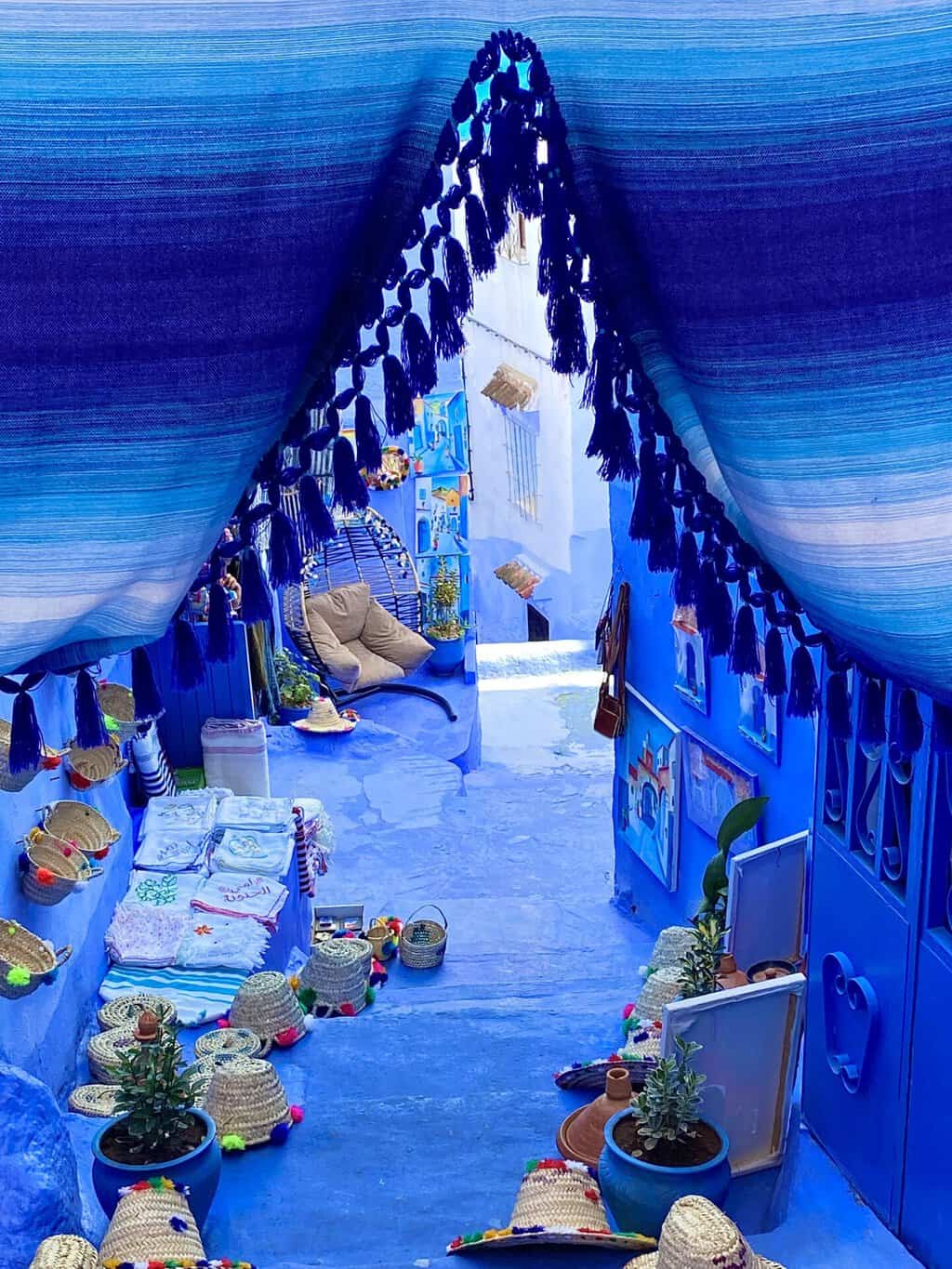
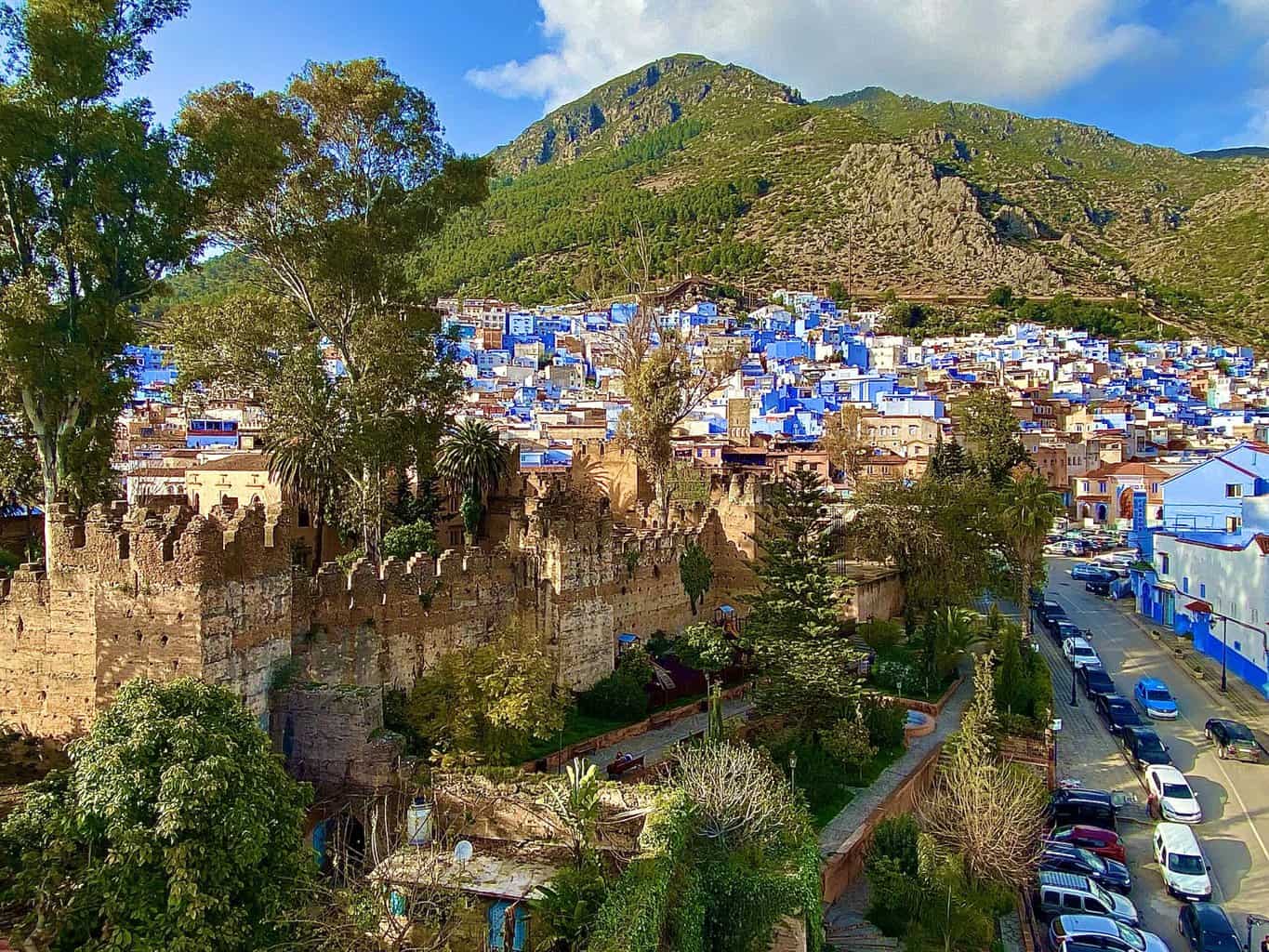
Chefchaouen, “the blue city” is a truly magestic and charming place that everyone should visit. Set below the Rif mountains, the town was founded in the 14th century as a fortress to repel Portugese invadors. The kasbah was built in the 17th century by Moulay Esmail. The cobalt blue buildings and steps, colourful painted doors, multicoloured shops and crafts, crisp mountain air, and low-key relaxed vibe, feels welcoming as you stroll through the narrow streets and hills.
Chefchaouen is a small enough town that you can walk through the narrow streets and stairways safely on your own. A local guide can provide context on the history and culture of the city, including why the buildings are painted blue. This is a place where you will want to take many photos and your guide will take you to the best locations. Many people like to hire a professional photographer to get Instagram-worthy pictures as they explore the city.


Marrakesh
Marrakesh, situated west of the foothills of the Atlas mountains is one of four imperial cities in Morocco. It is known as “the red city” because of its red-coloured walls and is over 1,000 years old. Marrakesh is the most popular place to visit in Morocco and combines western style glamour, exotic riads and bustling souks, parks and palaces, mosques, and traditional cultural influences.


The central square called Jemaa el Fna buzzes with energy at night and has a carnival like atmosphere. It’s a gathering place where the scents of spices and roasting meats permeate the air, and the entire space is filled with vendors selling fruit and food, a variety of clothing and goods in booths or small stores, and entertainment like snake charmers, musicians, storytellers, and games of chance. The best time to explore Jemaa el Fna is by night when it is most vibrant.
Marrakesh has multitude of activities and sites to see. Stroll through the gardens of the luxurious La Mamounia hotel or visit a hammam at an upscale spa. Visit historic sites, museums, and parks including Bahia Palace, Saadian tombs, Old Town of Marrakesh (called the Medina Quarter), Majorelle Garden, Sar Si Saeid and Berber Museums. The Koutoubia Mosque near the central square is a distinctive landmark in the area.

The Medina Quarter of Marrakesh is a maze of shops and alleyways that are easy to get lost in. To avoid getting lost try one of these city tours.
A wide variety of day trips are available from Marrakesh including hot air balloon rides or excursions in the Atlas Mountains. Overnight trips to the desert are also common. Some visitors to Morocco only have a short time to visit and if you are based in Marrakesh this overnight tour in the Sahara desert is a must-see, once in a lifetime experience.


Merzouga Desert
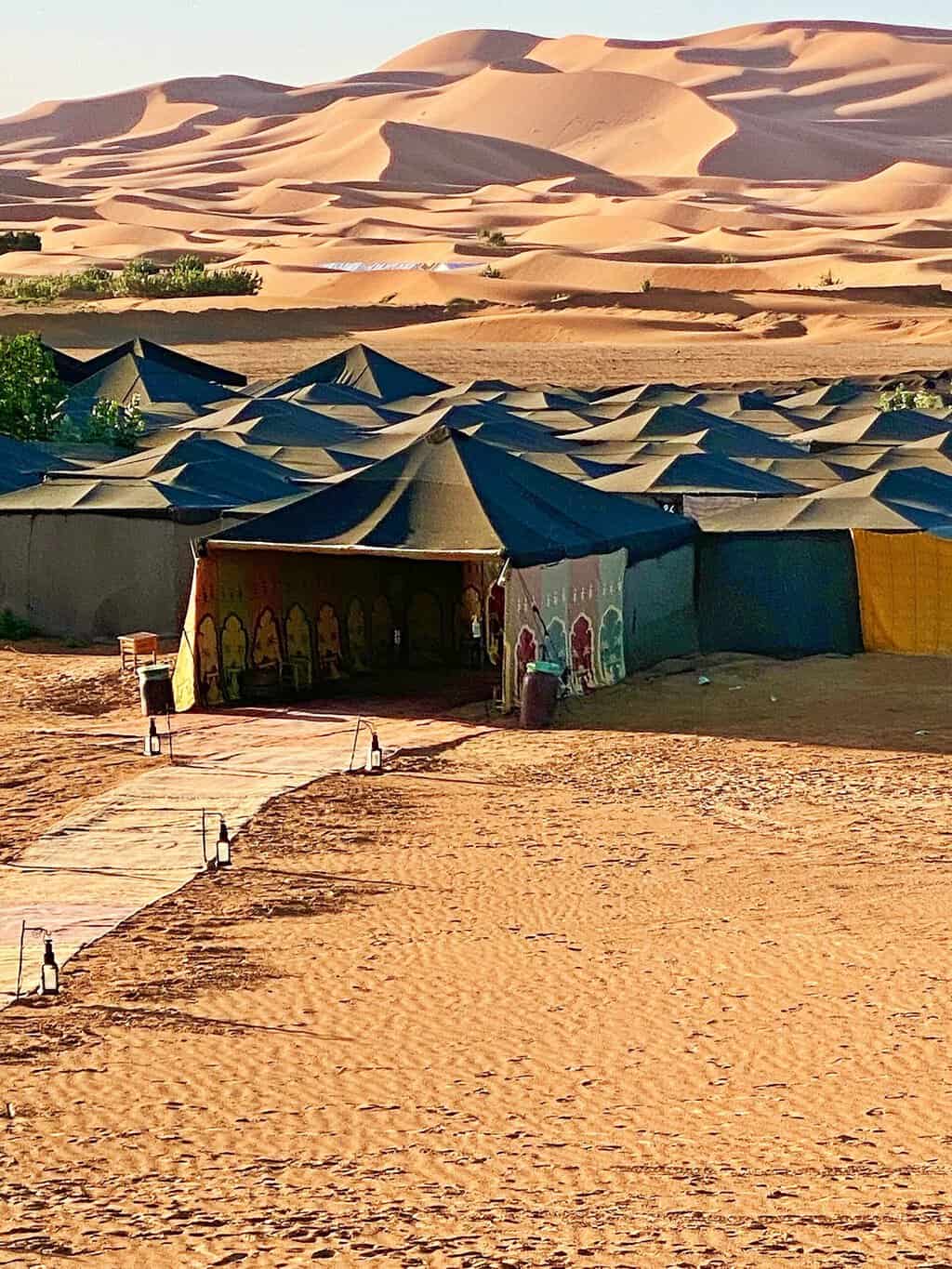
An overnight stay in the Merzouga Desert is truly a once in a lifetime experience. Feast Berber style and be entranced by an African drum performance. Sleep in a rustic camp of tents and awake in the starlit darkness for a camel trek into the desert as the sun rises. Prepare to be amazed and awestruck as the sun illuminates the vast never-ending sand dunes. Hunt for dinosaur fossils which are scattered throughout this barren land.



Essaouira
Learn to windsurf, kitesurf, or catch a wave while surfing in ”The wind city of Africa”. Essaouria is a beachy, artsy, surf town where you can relax on sandy beaches, ride on horseback along the coast, or join an impromptu game of football. Be sure to walk along the fortified ramparts of the town and admire the beautiful paintings, art galleries, and crafts of Essaouira’s local artists in the medina (a Unesco World Heritage site). Enjoy a freshly caught seafood dinner from the local fish market while watching the sunset and listening to live music at one of the lively rooftop restaurants.




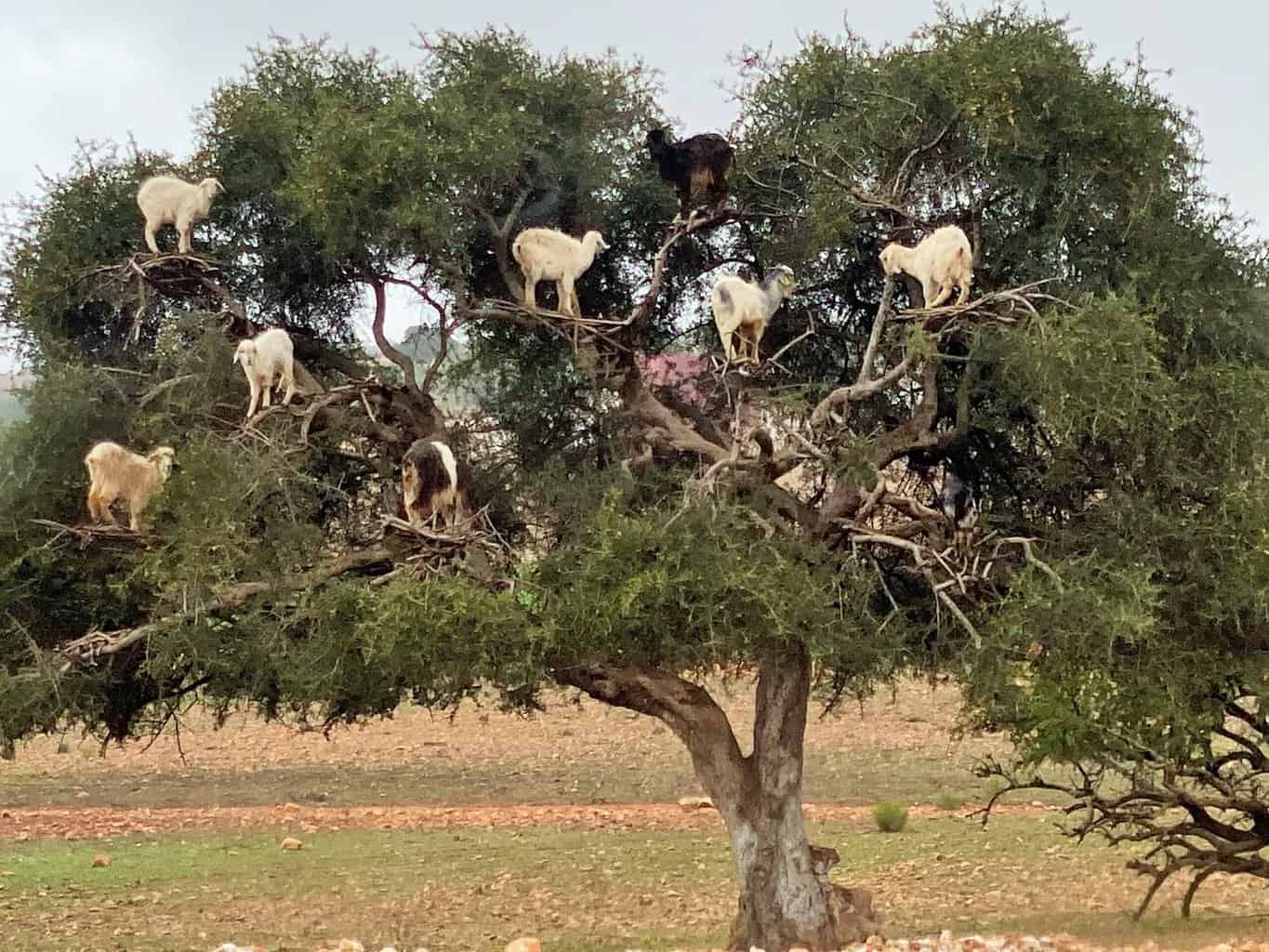
On the road to Essaouria be sure to keep an eye out for goats in the trees which are an important part of the local argan oil production process. Locals with newborn baby goats flag down tourists from the side of the road for an adorable and irresistible photo (for a small fee).
Fez
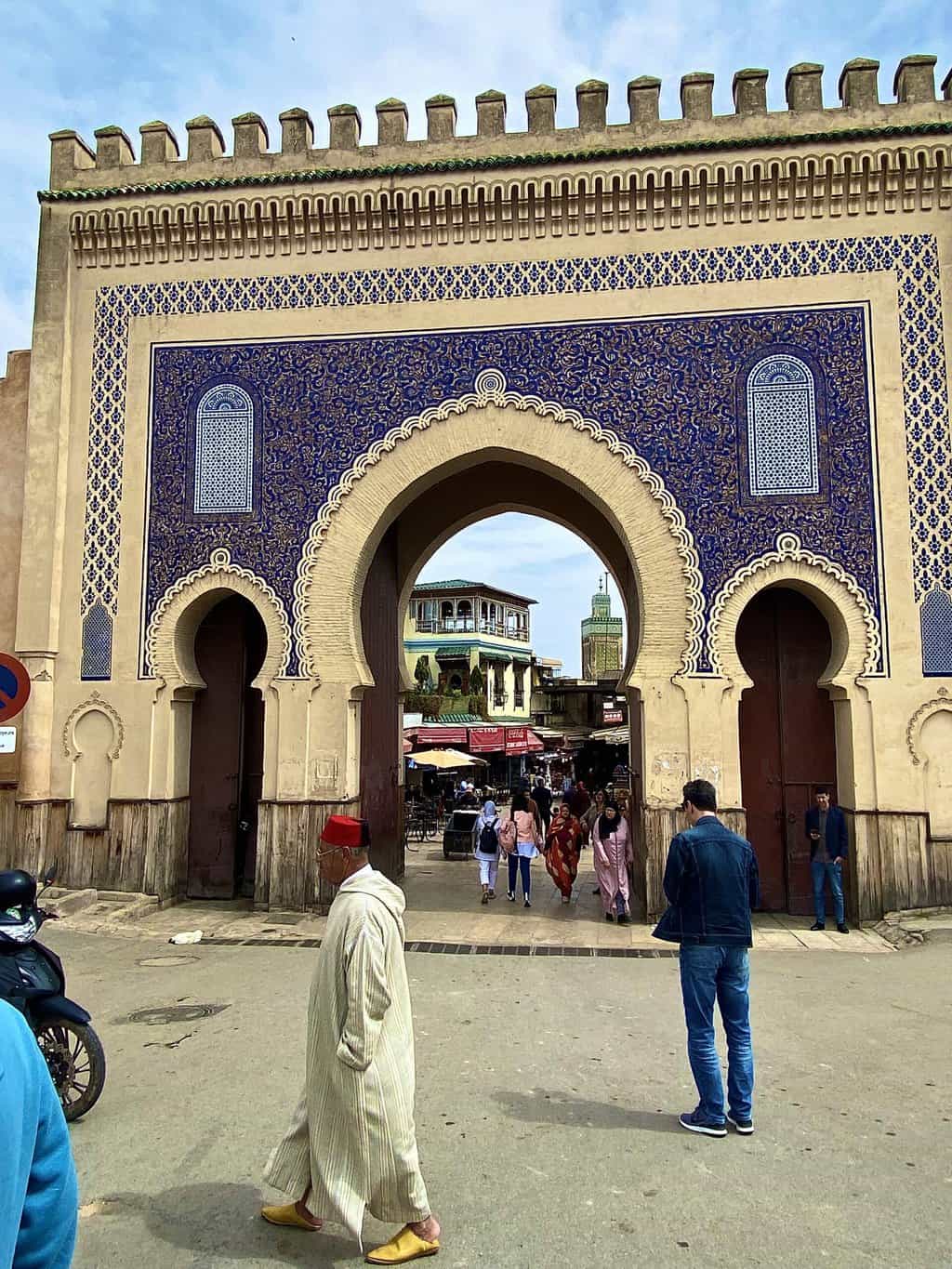
Overlook Fez, one of the four historic imperial cities, with a panoramic view of the medina and old city. Hiring a guide is a must to navigate you through the chaotic alleyways of the ancient medina, a massive car-free labyrinth within a fortified city.
I don’t know how any tourist would make their way through the Medina on their own and find their way out. The Medina is bustling and crowded and takes hours to navigate from one gate to the other. Our guide even hired an extra local to “count” us to make sure no one was lost in the Medina. Our tour guide told us that he had travelled to Fez ahead of time to familiarize himself with our route the week before our tour and he leads these tours for a living. Save yourself the stress and be sure to hire a local guide!
The Medina is filled with shops selling clothing, exotic foods, and handcrafted items including textiles, carpets, leather goods, glasswear/glass lanterns, mosaics and pottery, and metalwork.
Admire the intricate mosaic tile and carvings of the Nejjarine fountain and hold your nose while visiting the famous tanneries. One of the most photographed sights in Fez is the islamic school called Medersa Bou Inania and pilgrims flock to the great mosque of Fez el-Jdid during Ramadan.


Casablanca

Visit the iconic Mohammed V Mosque which is the only mosque in Morocco that non-Muslims are allowed to enter. Casablanca is a modern city and the country’s economic and business centre integrated with historic traditions and mixed cultures.

Ait Benhaddou & Ouarzazate
Framed by the white capped Atlas mountains in the background, the Atlas film studios near Ouarzazate are one of the largest film studios in the world. The studio is famous for shows like The Mummy, Gladiator and the Passion of Christ. Game of Thrones was filmed at Ait Ben Haddou, a world heritage site.

Boulmane Dades
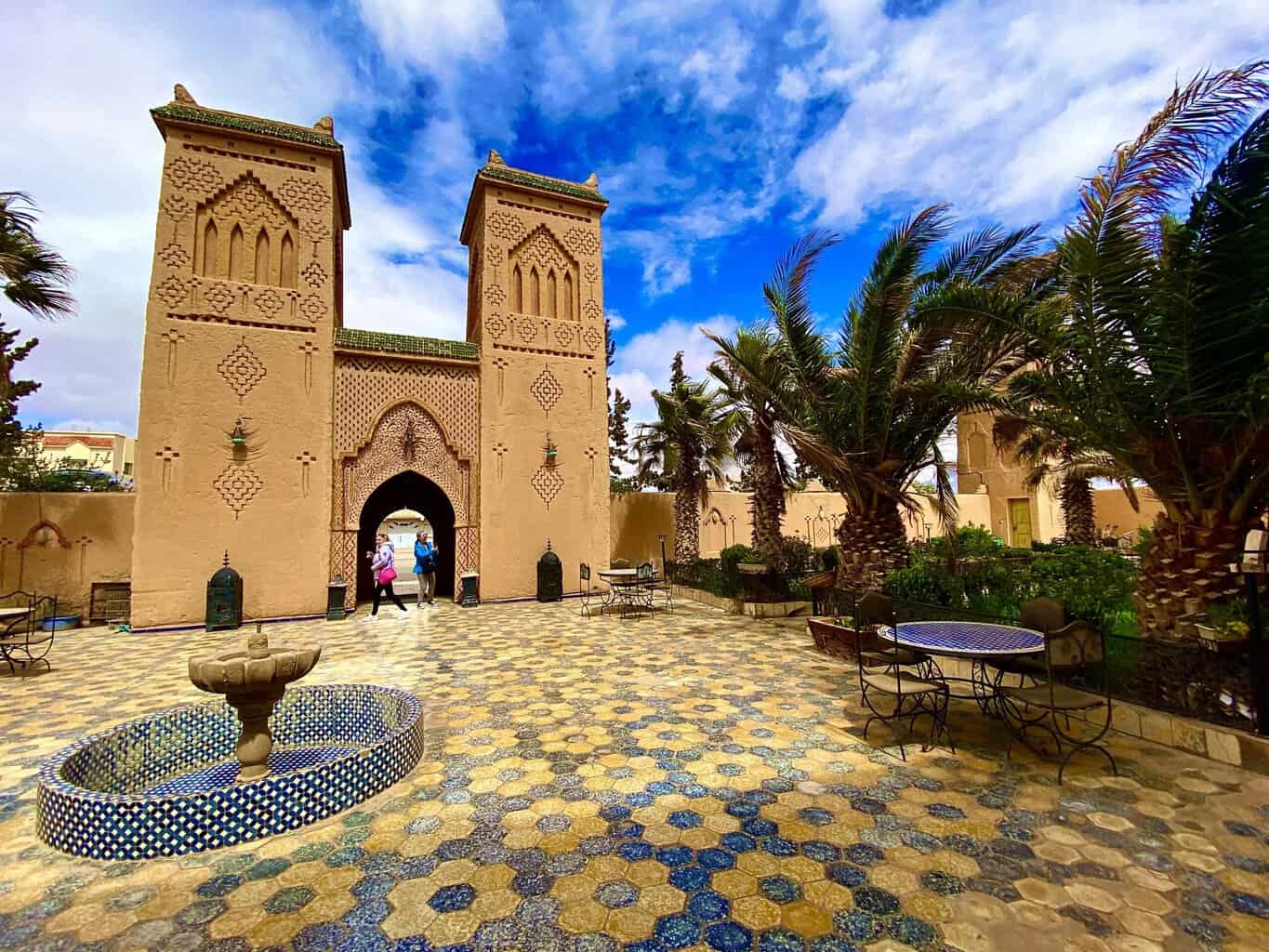
Travel along the road of 1000 kasbahs to view the barren and desolate landscape spotted with ancient fortresses and the occasional lush green oasis. Visit the Todra Gorge, and stare at the daring rock climbers scaling the deep sided canyons.
Rabat
Rabat is the capital of Morocco and one of the four imperial cities. The Kasbah of the Udayas overlooks the Atlantic ocean and surfers catch a wave in the in the coves below. The Royal Palace of Rabat has housed the Royal Family and there is accommodation for the Moroccan Royal Guard who watch over the entrance.


Volubilis and Meknes
Visit the enormous and well preserved ancient Roman ruins of Volubilis set in a lush green valley and look out over Moulay Idriss Zerhoun (a town formed in the shape of a camel).
Meknes is one of the four imperial cities and the surrounding area is the main agricultural and wine growing region of the country.

Atlas Mountains
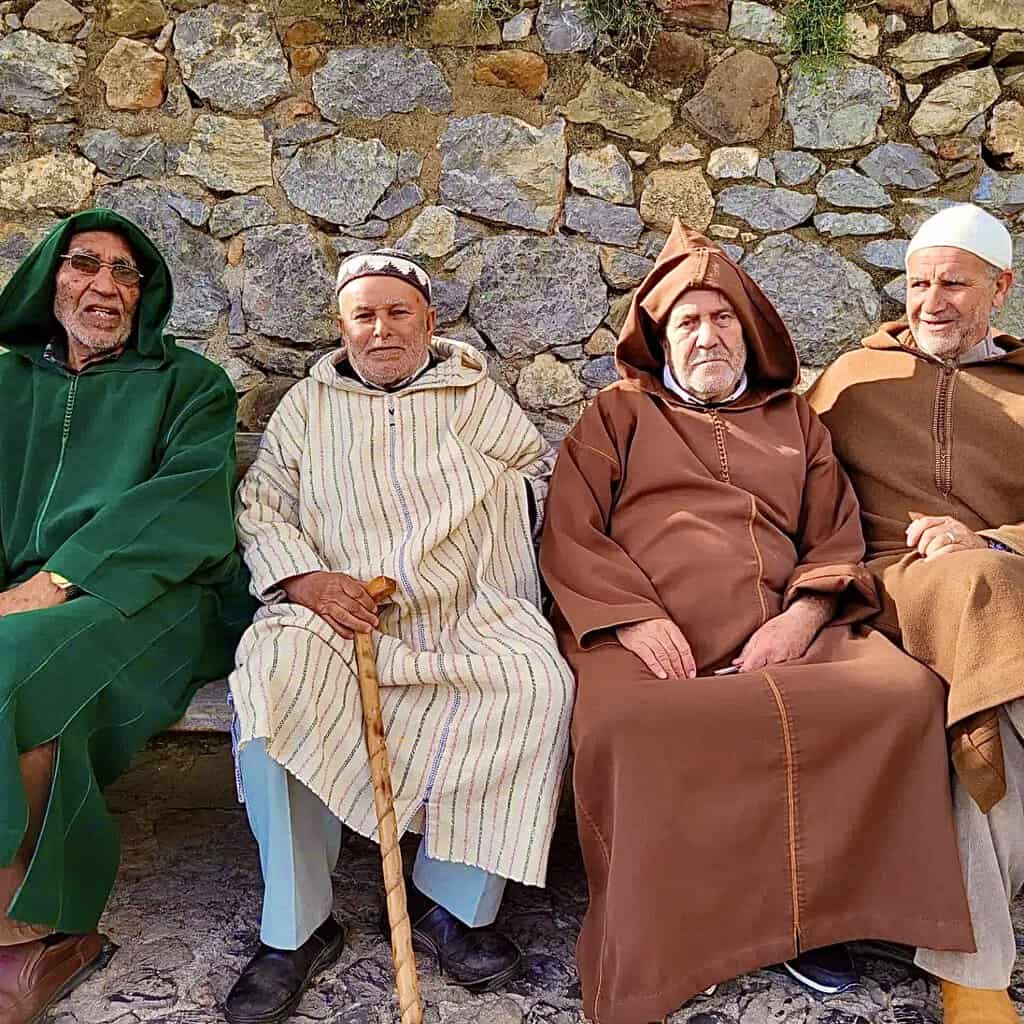
The Atlas Mountains are vast and separate the Sahara Desert from the Mediterranean Sea and Atlantic ocean. The mountains are divided into the Anti Atlas, Middle, and High Atlas regions and are inhabited mostly by the Berber people. The Berber people are native to North Africa and have their own unique language and culture. You will see them throughout the area living in traditional villages, kasbahs, or some nomads live in temporary camps with carpeted walls.


The Atlas mountain range attracts many travellers who are looking for adventure sports such as hiking, backpacking, rock climbing, biking, skiing and snowboarding. Others prefer to see the historic sites and natural wonders in this special area such as the Ouzoud Waterfalls or Ait Ben Haddou.
Ifrane – In the middle Atlas mountains is Ifrane, frequently called the Switzerland of Morocco because of the alpine style architecture, European style chalets, and ski slopes. The famous Ifrane Lion sculpture is a symbol of the city that every visitor aspires to be photographed with.
Agadir – Near the foot of the Atlas mountains you will find Agadir and its premier all-inclusive coastal resorts. Tourists flock to the impressive, wide sandy beaches and rent out sunbeds and umbrellas.
Other experiences
Hiking – The Rif and Atlas Mountains offer breathtaking views and a challenging adventure for those who wish to explore beyond the cities. Try one of these treks for the day or multi-day tours through this picturesque and unique landscape.
Hammam – Enjoy the experience of a traditional hammam. Public bath houses have been around since Roman times and a hammam is both a sacred tradition and social ritual.
You start with removing your clothes and sitting a dry heated zone, before entering a steam room to open your pores. Black olive oil soap or a clay mixed with herbs is applied to the body and bathers are rinsed with warm water with a bucket splashed over your body and head.
Finally, you are scrubbed vigorously with a loofah to shed a layer of skin. Bathing with others is unusual for North Americans but it is part of daily life in Morocco, and you will leave feeling renewed and relaxed.
Watersports – Surfing, windsurfing, rafting, kayaking, and kitesurfing are popular watersports in Morocco.
Hot air balloon – Float over the Moroccan countryside in a hot air balloon at day break with panoramic views of the High Atlas peaks and foothills as far as the eye can see. At the end of an exhilarating ride sit down to a hearty traditional Berber breakfast and mint tea.
My friend and I took this hot air balloon tour at sunrise over the countryside near Marrakesh. It was an exhilarating trip as we rose higher and higher, floating silent and weightless as we gazed out over the Atlas Mountains. The sky was spotted with other hot air balloons and we finished off the trip with a delicious, traditional Berber breakfast in an outdoor tent.
Photograph the amazing historic sites, nature, and intricate Moroccan architecture, ornately decorated riads, mosques, and walled medinas.
Shopping – Bargaining is an art as you search for hand painted pottery and ceramics, colourful handwoven scarves, high quality leather goods, intricately laced metal and woodwork, glittering jewellery, carpets, or handmade argan oil products. The best souks are Marrakech, Fez el Bali, Essaouira, Taroudant, and Tiznit.
Food Tours – If you are interested in learning how to make delicious Moroccan dishes at home check out one of these cooking classes or take a food tour to sample the unique and tasty local cuisine.
Morocco: Best Time to Visit
- Morocco is large, with a diverse geographical area and varied weather patterns depending on the location and time of year.
- Spring (between February and late May) and autumn are popular times for travel throughout all of the diverse geographical areas of Morocco. Holiday periods including Christmas, New Year, and Easter are busy times.
- Fez, Marrakesh, and the desert areas are extremely hot in the summer months (exceeding 45 degree Celsius or 113 farenheight) so avoid travel particularly in the desert during July and August.
- The north and Mediterranean coast areas can be cold and wet in the winter and spring and the Atlas regions can be bitterly cold in the winter but these areas are comfortable temperature to warm in the summer.
Morocco: Best Way to Get Around
- Fly – There are low-cost European airlines that fly to Morocco as well as domestic flights (Royal Air Maroc) to get to larger centres.
- Ferries – Ferries connect major cities in Europe to Tangier, Agadir or Casablanca.
- Trains – Major cities and towns are connected by train, and comfortable to travel on, but you will not be able to get to remote locations or smaller towns. Routes are limited by train.
- Bus/Guided tour – Busses can reach locations that trains cannot and they are less expensive but also less comfortable. Public busses may be less reliable. If you are on a guided tour, you will travel by coach throughout the country which is a great way to see the varied landscapes in comfort and safety.
- Grand Taxi – A grand taxi is usually a big Peugeot or Mercedes car carrying six passengers and there are a wide variety of routes available. Taking a shared grand taxi, is faster than public busses, but also safer and more comfortable. A grand taxi is a great way to get around Morocco economically as it is only a slightly higher cost than a bus and the fares are preset. Popular routes have regular departures throughout the day and you just show up at the terminal and ask for a place to a specific destination. Safety can be a concern though as you may not be able to wear a seatbelt and drivers may work long hours and drive aggressively.
- Renting a car – You can drive in Morocco but I would not recommend it. There are risks in driving in remote areas, in the dark, or poor road conditions such as the desert. Accident rates are high and local drivers often ignore traffic regulations and drive aggressively. Filling stations can be few and far between in rural areas. Signage will be in the local language and may be challenging if you don’t understand Arabic.
- Uber and taxis are reasonably priced and readily available in the main tourist areas. Agree on the price before you get in.
Language
- The main languages are Moroccan Arabic (Darija),
- Tamazigh (Berber), and
- French.
- English is spoken in some tourist areas but not by everyone.
Religion
- Islam is the state religion of the country and about 99% of the population are Muslim (virtually all Sunni).
- The government plays an active role in determining and policing religious practice for Muslims, and disrespecting Islam in public can carry punishments in the forms of fines and imprisonment.
Currency & Money
- Moroccan dirham (Dh) is the national currency but
- some places will take Euros.
- ATM’s are widely available and credit cards are accepted at urban tourist areas (may incur a surcharge of 5%).
- Only cash is accepted at the souks.
- Dirhims are restricted and it is illegal to import or export dirhams outside of Morocco so you need to get cash when you arrive.
Morocco: Essential Information

Use a Eupropean Style Plug with 220 volts. If you are coming from North American you will need an adaptor for both the plug and voltage to avoid damaging your devices.

| Visa | Tourist Visa is not required for Canadians, Americans, EU, UK, Australia and New Zealand citizens up to 90 days. |
| Time Zone | Western European Time (same as Spain) GMT plus one hour (no daylight savings time). |
| Electricity | European style two prong electric (Type C or Type E) 220 volts, 50 Hz cycles alternating current (AC). |
| Capital City | Rabat (population around 2 million); Casablanca is the largest city with a population over 3 million. |
| Sports | Football is the main sport in Morocco. |
Morocco Highlights: Local Taboos and Customs
Islamic beliefs
- Islamic practices and beliefs are adhered to in Morocco’s customs, laws and regulations. Behave discreetly and respect religious and social traditions to avoid offending locals.
- Dress conservatively and be sure to cover shoulders and knees. Never sunbathe topless. Typical fashion for local women varies from Burkhas in more rural, remote areas to more westernized dress in larger centres like Casablanca or Marrakesh. Many women wear a headscarf, but traditional clothing and headscarves are not expected for non-Muslim tourists.
- If you travel to Morocco during the lunar month of Ramadan like I did, be aware that this is a month of fasting, prayer, reflection and community. Observance of Ramadan is one of the five pillars of Islam and it starts at different times each year when the ninth month falls on the Islamic Lunar calendar.
- Muslims normally eat a predawn meal, fast and abstain from drinking water from sunrise to sunset, and then break the fast for a nightly communal feast called Iftar. Muslims refrain from not only food but tobacco, sexual relations and sinful behaviour.
- Some services may not be available or have limited hours but many continue as normal in tourist areas. Tourist restaurants are open during the day and non-Muslims do not need to fast but it is impolite to eat, drink, or smoke, in front of your Muslim friends who are unable to do so.
- Non-Muslims will not be allowed entry into most mosques. The Mohamed V Mosque in Casablanca allows non-Muslims to enter when services are not in progress.
- Five times a day you will hear the Islamic call to prayer often through loudspeakers in the towns or cities you are visiting.
Taboos
- The left hand is considered unclean as it is used for the toilet. Don’t handle food with your left hand particularly when eating from a communal dish.
- Ask permission before taking someone’s photo. Photos are not allowed in some areas such as strategic military areas or buildings owned by the royal family.
- Men will wait for women to offer handshakes.
Drugs and alcohol
- Alcohol is forbidden in Islam but was served in many tourist restaurants and at grocery stores when I was there. In some towns there were almost no bars and the bars that did exist were smokey and male dominated.
- Violations of drug laws is taken seriously and tourists could face severe penalties, high fines or imprisonment. In contrast it may be tolerated if locals smoke hashish (Kif) discretely.
Public displays of affection
- Public displays of affection are frowned upon.
- Male to male sexual activity (including kissing) are illegal in Morocco and could result in a jail term or fine. Same sex couples should be cautious about public displays of affection and transgender travellers could also face abusive and discriminatory conduct.
Morocco: Food and Drink

Tajine – This is a type of stew cooked slowly in earthenware pot. Usually there is a meat as a base of the stew and some type of vegetables or fruit such as lemons, potatoes or carrots. Popular tagines include lamb or beef with prunes, kefta (spiced ground lamb or beef meatballs with eggs and zesty tomato sauce), chicken with lemon sauce or goat meat.

Mint Tea, sometimes called “Berber whiskey”, mint tea is served everywhere and is considered to be Morocco’s national drink. Traditionally mint tea is piping hot and poured from a metal teapot, from as great a height as possible to make bubbles.


- Cooked vegetable salads are commonly served as a starter dish in Morocco. They are a little different everywhere but might include items such as grilled aubergine, beans, rice, olives, potatoes, beans, or carrots. A typical starter salad is tomato, cucumber, mixed with onion and cilantro or parsley and seasoned with cumin.


Some dishes in Morocco are common every where while other dishes are regional such as fresh seafood and fish.
- Seafood and fresh fish like the John Dory (whitefish) are common on the coast.
- Seasoned Moroccan kebobs of meat can be found everywhere including lamb, goat, chicken, beef or mixed meat (including heart, kidney and liver).
- Fresh fruits are often served for dessert and for breakfast. Breakfasts typically include freshly squeezed orange juice and Moroccan pancakes (Beghrir) with the texture of a crumpet is served with honey or jam.
- Pastilles may be savoury with meats and/or vegetables.
- Pastille Bastilla is a sweet pie made from multilayered wafer thin pastry, with toasted almonds, cinnamon and cream.
- There are many different types of Moroccan sweets including Chebakia, a traditional sweet pastry popular during Ramadan or Sfenj, Moroccan deep-fried doughnuts sprinkled with sugar or drenched in honey.
- Moroccan flatbread is typically served to dip in your Tagine and is sometimes pan fried and sometimes baked.
- Couscous is a start staple dish known as the national dish of Morocco.
- Harissa (hot chilli sauce) is commonly used to spice up tagine.
- Morocco produces its own wine primarily in the Meknes region. Moroccan reds and gris (pink or grey shades) are usually better than whites.
For the More Adventurous


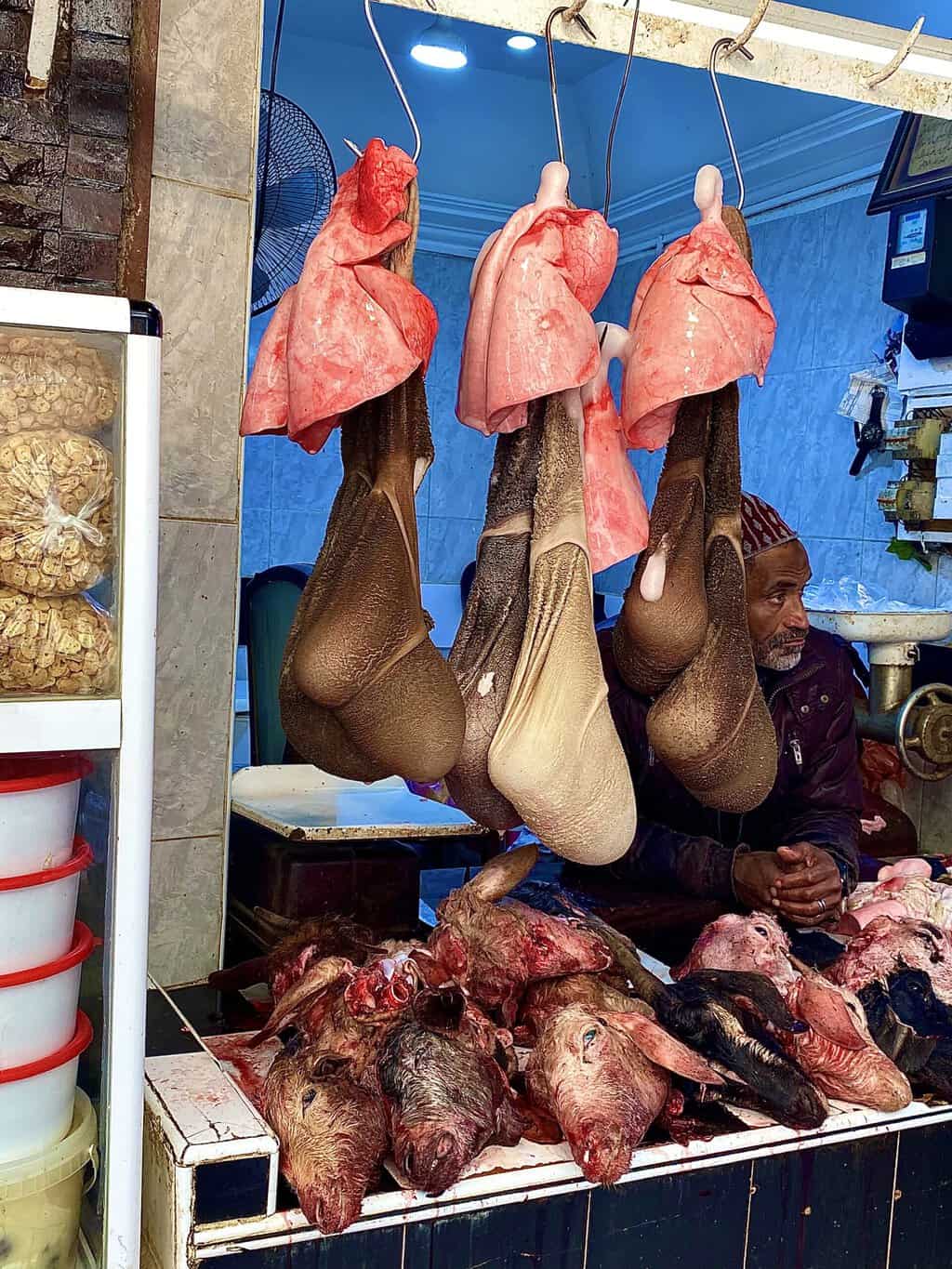
Sheep’s head, Camel spleen, Snail soup, Tripe, and Cow’s feet were available at local markets and at El Jemma Square.
Morocco: Health and Safety
- Drink bottled or filtered water which is readily available. Water is generally safe in the cities but can still cause stomach issues for some people.
- Emergency telephone numbers of Morocco are 19 for police and 15 for ambulance and fire.
Health
- There are no mandatory vaccinations to travel to Morocco but it is recommended that you are up to date on regular vaccinations including Hepatitis A&B, Measles, Rabies, and Tetanus.
- Medical care varies throughout Morocco with good private medical facilities in the main cities of Rabat, Marrakesh, and Casablanca. Public health facilities are not usually equivalent to North American standards. Doctors and hospitals usually require immediate cash payment for treatment. Ensure your travel insurance covers medical evacuation and hospital stays.
Safety and crime
Morocco is relatively safe, and Moroccans are generally very friendly and hospitable, but you should always use common sense and take reasonable precautions.
- Petty crime could occur, particularly in crowded areas like medinas, parks, or beaches. Secure your personal belongings, don’t flash expensive items, and wear a crossbody purse or backpack worn in front to prevent purse snatching, including by motorcyclists or pickpockets.
- Avoid scams and take precautions to prevent credit card fraud. Pay in cash where possible. Stay on the main streets, especially when in the medinas, and don’t wander off alone with strangers to deserted alleys or change your planned itinerary at their request. Tourists have been tricked into going to stores and intimidated into making purchases.
- Hire only official guides recommended by hotels, travel agencies or local tourist authorities.
- Exercise caution in the mountainous Rif region, on the northern coast of Morocco. Drugs are produced in this area and tourists are occasionally tricked into unknowingly committing drug offences.
- Occasionally more serious crime occurs such as armed robbery or theft at an ATM. Don’t resist.
- As in many parts of the world, there have been past terrorist attacks impacting foreigners or demonstrations that turn violent, such as in Rabat. These are not everyday occurrences.
Solo women travellers
Before travelling to Morocco I was warned that women travelling alone might be subject to certain forms of harassment and verbal abuse. For example, women and girls could be stared at or the subject of sexual harassment such as catcalls or staring when wearing swimsuits or even just walking down the street.
I travelled as part of a group tour in Morocco and did not have this experience. Even when my female friend and I walked through Essaouria on our own or went to a bar by ourselves in Chefchaouen we did not encounter harassment. Some locations, in more traditional, smaller towns and rural areas felt less comfortable and I would probably not want to wander on my own without the tour group. I never felt unsafe though or believed that someone would do harm to me.
Dangerous area
There is one area that I recommend that you should stay clear of. The Western Sahara is a former area of conflict with unclear political and legal status. This area has unexploded landmines, particularly in remote regions and the militarized zone. The militarized boundary, known as the Berm, separates the Moroccan-controlled part of Western Sahara from the rest of the Saharan territory, which borders Algeria and Mauritania. There’s also a threat of kidnapping against Westerners in remote regions of Morocco and in areas bordering Algeria and Mauritania.
Weather and risks of nature
Morocco is located in an active seismic zone. The rainy season usually extends from November to March, during which flash floods can occur frequently. These can be especially dangerous in the High Atlas valleys.
Swimming conditions in Morocco can be hazardous or a health risk. At some beaches on the Atlantic coast swimming is dangerous due to strong currents and tides so abide by signage and swim at designated beaches. Swimming in tourist areas is generally safe but public beaches in major cities can be polluted and unfit for swimming.
Driving and remote travel risks
- Road conditions and road safety vary greatly throughout the country, depending on location and weather (for example, in the mountains or during the rainy season). Avoid driving at night.
- Checkpoints are frequent. Carry your identification and vehicle documents at all times.
- Not all drivers respect traffic regulations. Pedestrians, scooters and animals on roadways can also pose risks.
- When travelling to remote areas ensure that your vehicle is properly equipped and has appropriate supplies and essentials, including potable water. Use only a four-wheel-drive vehicle for off-road driving in the mountains or desert.
- Restrict travel to officially designated tourist areas.
- Seek local, official tourist advice prior to travelling to the desert areas in the south. It is easy to get lost and I would personally not drive there on my own as there are no roads – you are literally driving through sand dunes.
Morocco Highlights: Things to Know
Tipping
- Tipping is an integral part of life in Morocco and almost any service can warrant a tip. Not tipping can be viewed as disrespectful. Tips vary depending on where you are and the service. It is recommended to tip in the local currency (Dh).
- A 10% tip at restaurants is standard and more can be left for exceptional service. Confirm if it is already included in the bill or not as you are not required to tip again if a service charge was added.
- In bars and cafes round up the bill to the next significant amount or tip a small amount like 2-5 Dh each time you order a drink.
- In hotels tip for services including housekeeping (20 Dh), bellhops/porters (20 Dh), concierge (20-50 Dh for exceptional service, or valets 20 Dh each time they get your car. If you receive a massage service tip 10%.
- Its common to tip taxi drivers 10% for longer drives or if they help with luggage. Otherwise round up the bill.
- Private drivers typically receive 150-200 Dh per day or 50 Dh per day per person. On a shared tour bus or minibus 20-50 Dh per day is typical.
- Tour guides typically receive 5-10% of the cost of the tour or about 70-150 Dh per half/full day tour.
- If you take someone’s picture you will usually be required to pay money for the photo.
Taxes
Morocco has a VAT of 20% for most goods but there are reduced taxes of 7%, 10% or 14% for certain goods and for example, water has a 7% rate. This is generally built into the price of goods.
There is also a hotel tax that varies depending on the type of accommodations you stay at and the star rating. A 5-star hotel will have a higher tax rate than a 3-star hotel but the rates per night vary widely.
Toilets
- Be aware that restroom conditions vary throughout the country. In hotels and nice restaurants toilets will seem similar to North American and European standards.
- Restrooms do not always have a flush toilet and many roadside stops have squat toilets.
- Bring toilet tissue paper with you as it is not always available.
- Toilets often have an attendant and a tip is expected so you will need to keep small change.
Rules, governance, and regulations
- Morocco is a Kingdom with a ruling royal family. The Moroccan constitution states that the person of the King is inviolable and respect is due to him. It is expected that people avoid any criticism of the monarchy.
- Non-smoking restaurants are rare although some only allow smoking in open areas.
- Morocco’s border with Algeria is closed. Don’t attempt to cross into Algeria by land.
- Unauthorized importation of bibles or other non-Islamic religious material is prohibited, except for personal use. Religious preaching is forbidden.
- Extramarital sexual relations are illegal. Hotels may refuse to allow couples to stay in the same room, if they’re unable to prove that they’re married. Foreigners, however, are almost always exempt from having to provide proof.
- Possession of pornographic material is illegal.
- Don’t take photographs of military or security installations. You may also be prevented from taking photos of the properties of the monarchy. Drones and surveillance equipment are prohibited and will be confiscated by the authorities upon entry.
Diverse geography and culture
Morocco is a large country with diverse landscapes including deserts and oasis, lush green agricultural and wine growing areas, remote and barren mountains, and coastal towns. You will need a minimum of 10-14 days to tour the country and see the highlights of Morocco. A quick visit would involve a stay in a base location like Marrakesh with a few day or overnight trips nearby.
Arab culture has dominated Moroccan life although the Berbers have lived in tribes in Africa for 4,000 years and they make up more than half of the population of Morocco. Only recently has the Berber language and culture been protected as their language was once banned from being spoken and taught in schools. Recently activists have started to revive the language and in 2011 it was recognized as an official language of Morrocco. Watch for signs of this ancient culture in stone houses built into the mountains, cobalt blue costumes and head scarves, and African rhythms and singing.
Norms
- Bargaining or haggling is part of the Moroccan experience, particularly in souks (markets) where they expect you to haggle. Expect to be regularly approached by vendors selling items, particularly in the souks.
- Children of Moroccan fathers automatically acquire Moroccan citizenship at birth, regardless of where they were born. Children of Moroccan mothers may submit a request for their citizenship. Dual citizenship is legally recognized in Morocco. According to Moroccan law, however, Moroccan citizenship takes precedence over any other citizenship. Airport authorities regularly ask dual citizens to produce their Moroccan national identification card.
- Morocco is a male dominated society and female travellers may receive unwanted attention and sexual harassment by local males (e.g. catcalls, staring). In more traditional areas women may find that locals speak to a male that is with you instead of directly to you (this is seen as a sign of respect to the male with you).
- Exercise caution if travelling to Morocco for romance, especially in cases of relationships initiated on the Internet. Find out beforehand about the country’s customs and laws on conjugal relations and marriage. Ensure that you retain possession of your return plane ticket, your money and your passport in case problems arise.
