


Winter Clothing for Canada: A Canadian Rockies Packing List
Are you worried about how to stay warm on a trip to the Canadian Rockies? Are you coming from a warmer climate and are not sure what winter clothing you need to pack for a notorious Canadian winter? I’ve got a printable Canadian Rockies packing list for winter and a complete guide to what you will need to survive the freeze.
I’m a Canadian who grew up in the prairie provinces where gasoline can freeze in the tank of your car, you must plug in your car on cold nights to keep it warm or it won’t start the next day, and my hair has literally frozen solid outside. Harsh, cold temperatures and snow covering everything for half the year were the norm throughout the entire winter when I grew up in Saskatchewan.
Since I moved to Calgary, Alberta over 30 years ago I’ve been pleasantly surprised that winter in the Canadian Rockies is milder than my hometown. It is still cold at times but despite the chilly weather I love to spend time outdoors during the winter.
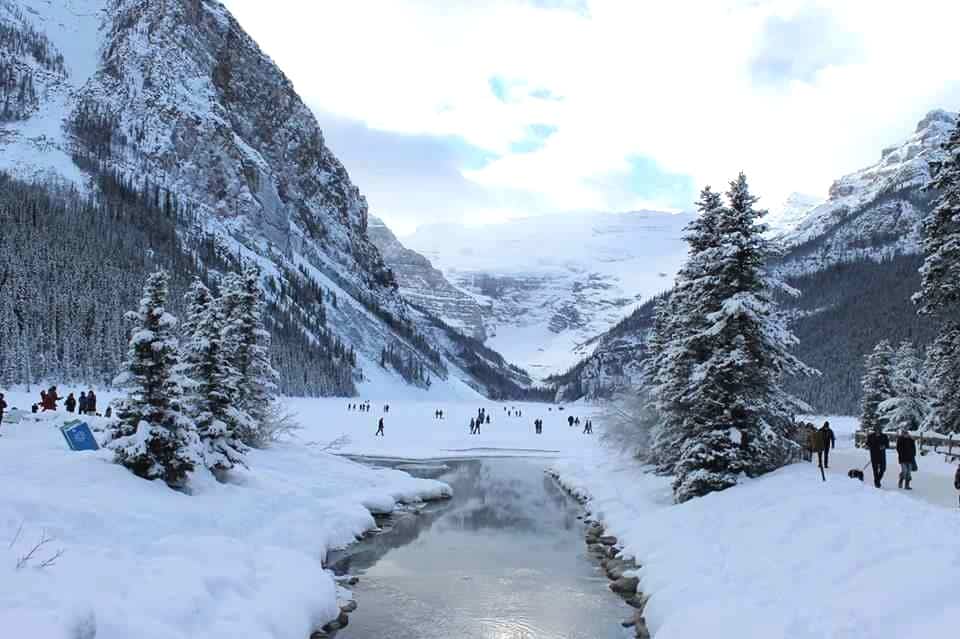
Winter in the Canadian Rockies is magical with bright sunshine, pristine snow-covered pine trees, sparkling white mountain peaks, and a peaceful quiet stillness. I have visited all of the national parks in the Canadian Rockies in winter and regularly snowshoe, cross-country ski, or ice skate in the Rockies each year. I’ve learned through experience how to dress to stay warm and cozy while exploring the mountain parks.
How cold does it get in Canada in the winter?
Canada covers a massive geographical area and is the second largest country in the world so the answer to this question is dependent on where you are in Canada.
Temperatures vary significantly depending on the region of Canada. It has been as cold as -63°C (-81.4 F) in the far north of the Yukon but it could also be higher than 20°C (68 F) in some parts of Canada on a January day. Typical temperatures fall within a narrower range of between 15°C above or below 0°C in the winter in the more populated areas.
The northern regions of Canada are generally colder than the southern regions. This probably explains why about 80% of the Canadian population lives within 150km of the border with the United States. Most urban areas in Canada are south of the 55th parallel so it is likely that you will be visiting one of the warmer areas comparatively.
The west coast of Canada in British Columbia experiences a milder, wetter winter where temperatures rarely dip below 0 degrees Celsius. On the east coast in Nova Scotia the weather is not as balmy in winter. Nova Scotia typically has cold snowy winters with fog caused by air mass clashes, and the occasional nor’easter snow storms brought in by strong winds from the north-east.
One thing that is common throughout Canada though is that winter has less daylight than in summer. Less daylight means fewer hours of sunlight and cooler weather particularly after the sun sets.
How cold will it get in the Canadian Rockies?
December, January, and February are the coldest months of winter with a typical temperature range in the Rockies between 0°C (32 °F) to -10°C (14 °F) during the day and -10°C (14 °F) to -20°C (-4 °F) at night. The lowest temperature recorded was –52°C (-61.6 F°), in Lake Louise on January 25, 1950. This is not the norm but temperatures between -20°C (-4 °F) and -30°C (-22 °F) during the day or night are not uncommon and at times it will drop below -30°C (-22 °F) in the winter.

Did you know that your eyelashes can freeze in winter? If you are wearing mascara it will freeze and then when you go back inside the lashes will melt and make you look like a raccoon with black all around your eyes.
The Canadian Rockies have a higher elevation and the lower pressure at higher altitudes causes the temperature to be colder on top of a mountain than at sea level. Banff is at an elevation of 1400 metres (4593 ft) while Lake Louise is at an elevation of 1731 metres (5679 ft). Higher elevation is why Lake Louise is typically a few degrees cooler. There are also unique weather and wind patterns caused by the mountains themselves.
Chinooks and windchill
A unique phenomenon of the Canadian Rockies is Chinooks, which are warm, dry, winds that can cause the temperature to increase up to 20-30°C in just a few hours. Chinooks provide a welcome reprieve with temperatures well above 0°C (32 °F) even in the middle of winter. When a Chinook wind is coming you will see a Chinook arch, which is a unique cloud pattern that looks like a storm cloud and results in stunning sunrises and sunsets with vivid colours.

It’s not all warm winds and spectacular sunsets in the Canadian Rockies. Canadians often say that the weather is “X°C” with the windchill. Wind chill numbers are always lower than the air temperature and it can feel much colder than normal. Your body temperature will drop more quickly and you need specific winter clothing to protect you from this cold, harsh weather to prevent hypothermia or frostbite.
Winter clothing for Canada: Best brands to buy
If you are not sure where to shop for warm winter clothing, suitable for the Canadian Rockies I’ve got some suggestions of specific brands or stores that I like and that offer good quality winter clothing. You should be able to buy these products online or in stores in Canada.
- Sorel hands down offers the best boots for a winter trek through snow! I’ve worn mine during countless all-day snowshoes, in -25°C (-13°F) and lower, and my feet have stayed comfortable, dry and toasty warm. Sorels have a grippy rubber sole, and waterproof suede, and they come in a ton of colours – be sure to buy the taller ones. They are surprisingly affordable and long-lasting. Graham has owned the same pair of Sorels since the 90’s and he still uses them to shovel snow in winter.

- Smartwool is my recommended option for the widest selection of men and woman’s Merino wool products like base top and bottom layers, underwear, socks, midlayer wool and fleece sweaters and jackets, and beanies, gloves, and headbands. Merino wool is not the cheapest option but it is worth it because it is lightweight but very warm, its not itchy, it dries quickly, and it doesn’t retain bad odours if you get sweaty.
- Uniqlo Heattech has a great selection of mostly synthetic men’s and woman’s thermal leggings, base and mid layer tops, as well as thermal underwear. Their patented “heattech” technology to seal in heat with a thin outer layer. They also offer a variety of outerwear like coats or gloves.
- Under Armour is my choice for a synthetic polyester base layer when you are going to sweat a lot from outdoor sports like skiing, snowshoeing, or cross-country skiing. They have a great selection of sportswear for woman and men and also offer mid layers like fleece and coats.
- North Face is a reputable brand that offers a wide selection of men’s and womans’ winter wear like winter parkas, jackets, snowpants, boots, fleece, SmartWool socks, gloves, beanies, and general outdoor bags and gear.
- Columbia Sportswear offers a wide selection of men’s and womans’ winter wear including insulated and down puffy jackets, ski jackets, and parkas, snowpants, boots, fleece, base layers, socks, hats, neck gaiters, gloves and general outdoor bags and gear.
- Arc’teryx specializes in outdoor gear in the mountains and offers men’s and womans’ insulated jackets, parkas, snowpants boots, fleece and wool pullovers, Merino wool and synthetic base layers, Merino wool socks, toques, gloves, neck gaiters and speciality outdoor bags and equipment (e.g. climbing).
- Patagonia Outdoor Clothing & Gear is well known for selling a wide range of men’s and woman clothing including puffy jackets and parkas, fleece pullovers, thermal baselayers, wool socks, gloves, mittens, and beanies.
When I need to buy winter clothing I either buy online on Amazon or at one of the following stores that offer many of the brands above, a wide selection, and quality winter clothing at a mid-range price:
- Sportchek
- Marks Work Wearhouse
- Atmosphere
- Mountain Equipment Co-op (limited store locations in Calgary or Edmonton)
- Mountain Hardwear
- Mountain Warehouse
- The Bay (More of a general department store with some winter clothes)
Complete guide: What to wear in Canada in winter
Tip #1: Dress in layers
My best advice to stay warm in winter is to dress in layers and to ensure the clothing next to your skin stays dry. If you will be outdoors for an extended period of time you need to wear a base layer that is breathable and dries quickly. Take off layers if you get overheated and add a layer if you feel cool.
Best materials for base layers
Synthetic materials like nylon or polyester or a Merino wool base layer are great insulators and they also dry quickly if you get hot and sweaty from outdoor activities. Wear synthetic or Merino wool t-shirts, long-sleeved shirts, and thermal long underwear underneath your pants.


Best materials for top mid layers
It is important to keep your core as warm as possible to prevent hypothermia. A middle layer like a fleece sweater, flannel shirt, or Merino wool sweater is ideal to insulate you from chilly wind and freezing temperatures. Some people like to wear hoodies in the winter as well as a middle layer which is okay as long as it doesn’t get wet because it can take a long time to dry.
If there is a Chinook or you get hot from physical activity you take off this mid layer to cool down.

Best materials for bottom mid layers
You can purchase fleece lined hiking pants or fleece-lined jeans as a middle layer and if it is not too cold you might not need an outer layer of snow pants.
Alternatively, if you will be quite active throughout the day you could wear a base layer of thermal leggings and snow pants and skip the middle layer.

Tip #2 Invest in two good quality winter coats
Most people who live in the Canadian Rockies have two coats. A lighter winter jacket, ideally a puffy, foldable, insulated or down-filled jacket that you can wear on a warmer day, in spring or fall, or as a middle layer on a very cold day. This is ideal if you are going from your car to shopping indoors and don’t want to wear or carry a warm parka.

The second coat you need is a thick, long winter parka. Look for the following features:
- Has a hood (detachable or not is your preference)
- At least thigh length to protect your legs from windchill
- Waterproof and windproof so it won’t get wet from sleet or snow
- Covers your body as much as possible and prevents cool air from getting in with tight wrist cuffs and waistbands that fit snugly
- Can be synthetic or filled with goose or duck feathers

If you buy a winter parka with goose or duck feathers ensure a high fill level if you want to stay warm. Fill level refers to how insulating the down is with higher levels being able to trap more air and creating a higher insulation value. This is measured by numbers in their hundreds, e.g. the highest available fill power is 900-fill.
Canada Goose is one of the best known brands of goose filled winter parkas worldwide. It is very warm but it is also very expensive, especially if you are only visiting a cold climate for a short time. I’ve never owned a Canada Goose jacket in my life so don’t feel you need to spend this type of money as it is not required.
Many other great brands offer great, stylish winter jackets at a lower cost. That being said, don’t try to save money by going too cheap on your winter parka. Expect to pay around $200 CDN ($150 USD) or higher for a warm winter parka. A good winter jacket is your main layer of protection on cold winter days and you will regret buying something too thin on a cold winter day.

Tip #3: Cover as much of your body as possible with windproof and waterproof outer layers
Snow pants
If you are doing any winter outdoor sports like skiing, snowboarding, tubing, tobogganing, cross-country skiing, or snowshoeing then wind and waterproof snow pants are a must to keep you dry and warm.
Snowpants are also essential if you need to stand outside waiting for a bus or any time you are walking outdoors in very cold temperatures (-15°C [5°F] or lower) for an extended period of time.
I recommend buying snow pants with “venting” to avoid getting overheated and sweaty. Venting is usually a zipper on your snow pants that you can open to let in the cool air. When I snowshoe uphill I get really hot and have used the venting in my snowpants to avoid getting overheated.

Long winter parkas
To keep as much of your body covered as possible buy a winter jacket that is at least as long as your thighs and preferably longer. It keeps your bum warm if you sit somewhere cold like an outdoor bench and it blocks the wind from blowing on your body.

Tip #4: Invest in warm, good-quality boots
Winter boots need to be insulated or they will not be warm. Many winter boot brands come with a temperature rate and ideally, you should buy boots that will stay warm in the coldest possible temperatures.
Features to look for when buying a boot include:
- Taller boots protect more of your lower legs from windchill, and keep snow from getting inside, so they are a better option than ankle boots for staying warm.
- Well insulated to stay warm below -20°C (-4°F).
- Rubber on the sole will keep your feet dry in slushy or snowy conditions.
- A good tread on the boot is helpful for snowy and icy conditions – flat soles will be slippery on ice

Tip: If you will be walking on ice or in slippery icy conditions a good pair of ice cleats that you can take on or off your boot is a must to keep you safe from falling and wiping out. This is the pair of microspikes that Graham and I both own and have worn walking across frozen lakes and icy hills in Johnston Canyon.
Tip #5: Protect yourself from frostbite, hypothermia, and windchill
If the weather is really frigid or you are outdoors for a long time your extremities including hands, ears, head and face are particularly vulnerable to frostbite. These areas must be covered and protected to stay warm.
Gloves and mittens
I recommend always having a pair of gloves and a pair of mittens with you. Mittens are warmer than gloves because the air doesn’t circulate around each finger but gloves are better for dexterity.
You can buy gloves like this pair that allow you to touch the screen on your phone without taking off your gloves which is handy when you want to take outdoor photos.
My lighter gloves are usually thinner and not waterproof. I wear them when the weather is warmer than -15°C, when it isn’t snowing, when I am doing some type of strenuous physical activity, or when I won’t be outside for very long. If the temperature drops lower or I am outside for a long time I bring out a pair of well-insulated mittens to wear over top of my gloves.
When buying gloves and mittens these are some features to look for:
- Insulated (as warm as possible
- Fleece lined – I really like this feature to keep my hands cozy and warm
- Cold weather rating to as low a temperature as possible – if it is only warm to -5°C (23°F) or -10°C (14°F) keep looking as this is not warm enough
- Waterproof or at least water resistant
- Length fully covers your wrist (usually goes over your jacket sleeves to block wind)
- Elastic wrist cuffs to keep cold air from getting in


Toques, beanies, earmuffs, and headbands
To seal in the heat and protect your ears from the cold you will need protection for your head. A beanie or toque is best on a really cold day when you need to retain as much heat as possible. Merino wool or another type of wool is a great material for insulation and some toques are fleece lined.
On a day that isn’t as cold, I often wear an outdoor headband that protects my ears but doesn’t cover the rest of my head so I can wear a ponytail. Some people also prefer to wear earmuffs or ear warmers to keep their ears warm without covering their whole head.


Homemade knitted winter hats are sold everywhere in the Canadian Rockies and they often come in really cute styles. I own quite a few different knitted hats.
Unisex Toques and beanies: Reviews and prices
Headbands for her: Reviews and prices

Scarfs, neckwarmers, neck gaiters, and Buff
You will need to prevent cold air from blowing on your face and neck and from going into your jacket. The way to do this is by wearing a scarf or neck warmer/neck gaiter. Buff is a popular brand that makes colourfully printed neck gaiters that do double duty as a headband.

Scarfs come in so many materials and styles that it is a matter of personal preference on what to buy. I usually like to buy an infinity scarf that doesn’t have an end to it and can be wrapped more loosely or tighter around your neck without it falling off and getting lost.

Tip #6: Keep your hands and feet warm
Your hands and feet are usually one of the first body parts to get really cold when you are outdoors in frigid weather or to get frostbitten if exposed. In addition to good quality, insulated, waterproof mittens the type of socks you wear can make a big difference in keeping your feet warm.
You need socks that go up your leg, not ankle length, and you need wool socks, not your typical cotton sport socks.
Wool socks retain heat and are excellent at absorbing and releasing moisture without your feet getting wet and cold. They are not itchy and they are excellent for outdoor winter activities. I try to use as thick a pair as possible but Merino wool socks are really good at insulating in a thinner material.

Another trick for keeping hands warm when it is very cold is to use multipurpose warmers like hot hands or grabbers. They also make these warmers for toes.
You can easily carry these lightweight packages with you and activate them if you need to warm up. Some mittens like these ones even come with built-in pockets so you can easily put your warmers inside.
Tip #7: Stay dry
It is pretty obvious that you will need waterproof outerwear like coats, gloves, and boots to stay dry from snow and slush. What many people don’t realize is that you can get really wet underneath outerwear from overheating and sweating.
If you are doing outdoor sports like snowshoeing or skiing it is likely to take a lot of physical energy and you will get hot and sweaty. If you have wet, sweaty clothing that retains moisture that clothing will feel cold and damp once your body temperature drops.
Remove layers quickly if you start getting hot and sweaty and wear clothing that drys quickly. I’ve removed layers right down to a t-shirt base layer for a short time when snowshoeing up a steep hill on a sunny winter day.
In particular, the base layers next to your skin need to dry quickly as you are less likely to remove this layer. Synthetic materials like nylon or spandex and Merino wool are my suggestions.
Tip #8: Avoid cotton
Cotton is not a good insulator in the winter and if it gets wet it stays wet for a long time. Avoid wearing cotton pants like sweatpants or jeans during outdoor winter activities or when you are in snow as they quickly absorb moisture from snow or sweat. Because they don’t dry quickly you will feel chilled and damp even when you are wearing other layers.
I do sometimes wear jeans in the winter if I am just walking around town and am not getting sweaty but I usually wear a base layer underneath or wear fleece lined jeans like these ones. There are also similar brands of fleece-lined jeans for men.
Tip #9: Retain moisture and protect your skin
The Canadian Rockies can be extremely dry and harsh on your skin. If your skin gets dry enough you might even find that your lips or skin crack or bleed. To avoid this be sure to bring a good moisturizer for your hands, feet and face and use lip balm liberally. A great local brand is Rocky Mountain Soap Co and they have stores all over the Canadian Rockies.
Another surprise to many visitors to the Canadian Rockies is how strong the sun can be from the reflection off of the snow. To avoid getting a sunburn apply a high SPF sunscreen daily and especially when spending a lot of time outdoors.
What not to wear in winter in the Canadian Rockies
If you are wondering what not to wear in the Canadian Rockies here are a few items that you don’t need to pack.
- High heels are impractical, don’t keep your feet warm, and they are very slippery in icy conditions.
- Running shoes with mesh will get wet and your feet will be cold if it is snowing or slushy.
- Ballet shoes or any other men’s dress shoes that are not waterproof, do not insulate your feet, and have flat soles.
- Jean jackets or leather jackets look cute, and you can certainly wear them indoors in winter, but you will freeze if you try to wear them as your outdoor jacket.
- Short skirts or dresses will be very cold if you spend any amount of time outdoors unless you have a thermal pair of pants or tights under the dress.
How to pack carry on winter clothing for Canada
If you want to pack carry on winter clothing in Canada it is possible. These are a few suggestions on how to take everything you need in a small bag.
- Avoid bringing heavy, bulky sweaters. Merino wool sweaters are very warm and take a lot less room because the material is thinner.
- Wear your heaviest winter parka jacket and bulkier clothing on the plane and use your foldable puffy jacket as a pillow.
- Wear your bigger winter boots on the plane instead of trying to pack them. It will be a bit of a hassle but will save you from checking in a bag.
- Your snow pants will be bulky and you will not want to wear them while travelling. To compress snow pants as small as possible use these vaccum compression bags to reduce the size. These can also be used for bulkier clothing to save space.
- Be sure to use compression packing cubes for your clothing to keep clothes compact in your bag.
- Avoid overpacking by bringing clothes that can be worn in multiple outfits and that can be easily cleaned or reworn.
- Use refillable silicone travel bottles to keep your toiletries below the carryon limits at the airport.
Printable Canadian Rockies Packing List: Winter Clothing for Canada
Canadian Rockies Winter Packing List

A complete printable packing list for the Canadian Rockies. How to pack everything you will need on a winter trip to Canada.
Instructions
How to Pack Winter Clothing for Canada
Base Thermal Layers
- Synthetic short or long sleeved tops or leggings (Dri fit, Uniqlo Heattech, or Under Armour brand - do not use cotton)
- Fleeced lined or Merino wool tops and leggings
Mid Layers
- Fleece tops and coats
- Flannel shirt
- Merino wool sweater
- Hiking pants (fleece lined and water-resistant)
- Jeans (fleece lined)
Outer Layers
- Lightweight packable down puffer Jacket
- Winter Parka (mid-thigh or longer length, well insulated, wind and water resistant, has a hood, elastic cuffs for wrists and snug bottom of jacket to ensure a tight fit with no space for wind to get into)
- Snowpants (warm, waterproof, with zippers for venting to avoid overheating)
Essential Outdoor Clothing for Extremities
- Thermal hat or Toque that fully covers head
- Winter headband or earmuffs to keep ears warm
- Scarf, fleece or Buff neck warmer/gaiter
- Thinner gloves
- Warm mittens with insulation and fleece lining (cold weather rated, waterproof, with elastic cuffs for wrists and length will fully cover wrists)
Footwear
- Boots (warm and as high up the leg as possible, water resistant, with grip tread (not flat bottomed) Sorel brand boots are highly recommended
- Thick wool hiking socks or thin Merino wool socks
- Slip-on flip flops (Hoka One One for indoor slippers and pool areas)
Other Clothing to Bring
- Bathing suit (for soaking in hot tubs or hot springs)
- Pajamas
- Underwear (thermal merino wool underwear is recommended)
Miscellaneous
- Day backpack
- Hot Pockets or Grabbers to keep hands warm in gloves or mittens and toes warm
- Ice cleats (Kahtoola brand recommended)
- Sunglasses and eyeglasses (if needed)
- Tissue paper/Kleenex
- Sewing kit
- Ziploc bags
Electronics
- Camera or Go Pro
- Cellphone and charger
- Kobo or Kindle
- Powerbank
- Electrical adaptor (if needed)
- Small lantern, flashlight, or headlamp
Toiletries and Medications
- Prescription medication
- Small first aid kit with moleskin (foot blisters), bandaids, sore muscle cream, Advil or Tylenol, cold medicine, and throat lozenges
- High SPF sunscreen
- Chapstick for lips
- Moisturizer for hands and body
- Shampoo and conditioner
- Toothpaste, toothbrush, floss, and mouthwash
- Deodorant
- Contact lens solution and case (if needed)
- Face creams and serums
- Qtips
- Hand sanitizer
- Small mirror, tweezers, nail clippers, and scissors
- Combs, brushes, and hair products
- Makeup and brushes (if needed)
- Hair accessories (e.g. headband or elastic band), and jewellery (if needed)
- Makeup eraser or washcloth
Important Documents (international travel)
- Passport
- Etickets or vouchers (flights, tours, etc.)
- Driver's license and photos or copies of identification
- Local currency, credit and debit cards
- Medical coverage/insurance cards and information
- Emergency contact informaiton
- Crossbody bag and travel wallet
Notes
- Dress in layers - base, mid, and outer layers
- Bring a light puffy winter coat and a warm, long, insulated winter parka
- Cover your body with windproof and waterproof outer layers
- Wear well insulated, water resistant, winter boots with good tread
- Protect your extremities like ears, head, hands, and feet from being exposed to the cold
- Wear winter clothing materials that dry quickly like Merino wool or synthetic fibres
- Buy quality winter clothing that is made to withstand the weather conditions
- Protect your skin (face and body) and lips by moisturizing liberally
FAQ’s
What kind of clothes should I wear in Canada in winter if I’ve never lived in a cold country?
You should wear layers of clothing including a base thermal layer (synthetic or wool), mid layers and an outer layer for outdoors. Materials like Merino wool, fleece, or flannel will keep you warm under your coat. Wear a parka, snow pants, insulated winter boots, a toque, gloves or mittens, and a scarf.
What shoes should I wear in Canada in winter?
Do you need winter boots in Canada? Yes, you need winter boots to protect your feet from cold temperatures which can result in frostbite. Buy boots that are well insulated, waterproof, with rubber soles and good tread. My favourite brand of boots is Sorel for heavy-duty winter conditions.
What type of jacket is best for Canada winter?
Jackets appropriate for Canada’s winter are well insulated with down feathers or synthetic insulation to keep you warm at temperatures of -30°C(-22 °F). The best winter parka is at least thigh length, wind and waterproof, has a hood and has elastic cuffs to keep out cold air. Look for brands like the North Face, Columbia, Arc’teryx, Patagonia, or Mountain Hardwear.
What should I wear for winter in Banff or Lake Louise?
Banff will be snowy, and cold (-5°C to -30°C), with some snowy days throughout most of the winter. Lake Louise is similar but a few degrees colder. Wear an insulated winter parka, snow pants, and winter boots, gloves or mittens, a toque, and a scarf. Underneath wear layers of thermal base layers, flannel, fleece or Merino wool tops, fleece-lined pants, and wool socks.
What is the best winter clothing advice for Canadian weather of -30°C (-22 °F)?
The best advice is to avoid being outside for long at this temperature no matter what you wear. Skin will freeze quickly and you could get frostbite if unprotected skin is exposed to -30°C (-22 °F) temperatures for more than a few minutes. Ensure you cover all parts of your body with protective winter clothing, especially extremities like fingers, ears, and your face.
Where is the best place to buy winter clothes in Canada?
When I need to buy winter clothing I either buy online on Amazon or at one of the following stores that offer great brands, a wide selection, and quality winter clothing at a mid-range price:
Sportchek
Marks Work Wearhouse
Atmosphere
Mountain Equipment Co-op
Mountain Hardwear
Mountain Warehouse
The Bay
Final thoughts: What to wear in Canada in winter
Ensuring you have packed the right winter gear for a winter trip to Canada is essential for an enjoyable trip to the Canadian Rockies. Thoughtful preparation is the key and I’ve covered all of the must-haves, from insulated layers to waterproof outerwear, to keep you warm and protected in the chilly mountain environment.
In summary, remember to:
- Dress in layers – base, mid, and outer layers
- Bring a light puffy winter coat and a warm, long, insulated winter parka
- Cover your body with windproof and waterproof outer layers
- Wear well insulated, water resistant, winter boots with good tread
- Protect your extremities like ears, head, hands, and feet from being exposed to the cold
- Wear winter clothing materials that dry quickly like Merino wool or synthetic fibres
- Buy quality winter clothing that is made to withstand the weather conditions
- Protect your skin (face and body) and lips by moisturizing liberally
In conclusion, preparing for a winter adventure in the Canadian Rockies is not just about staying warm; it’s about embracing the beauty and challenges of the season. Embrace the chill, savor the moments, and let the snowy peaks be the backdrop to your winter tale. Happy packing and happy trails!
My Favourite Travel Websites
I often get asked about where I book my travel. I’m always looking for deals that are a good value and these are the travel websites that I go back to again and again to book my own vacations.
Best Travel Websites
Booking.com
Hotels.com
VRBO or AirBnB
Expedia
Booking.com Car Rental
Suntransfers
Omio or Trainline
Motorhome Republic
Bus Bud

